

NEWYou can now listen to Fox News articles!
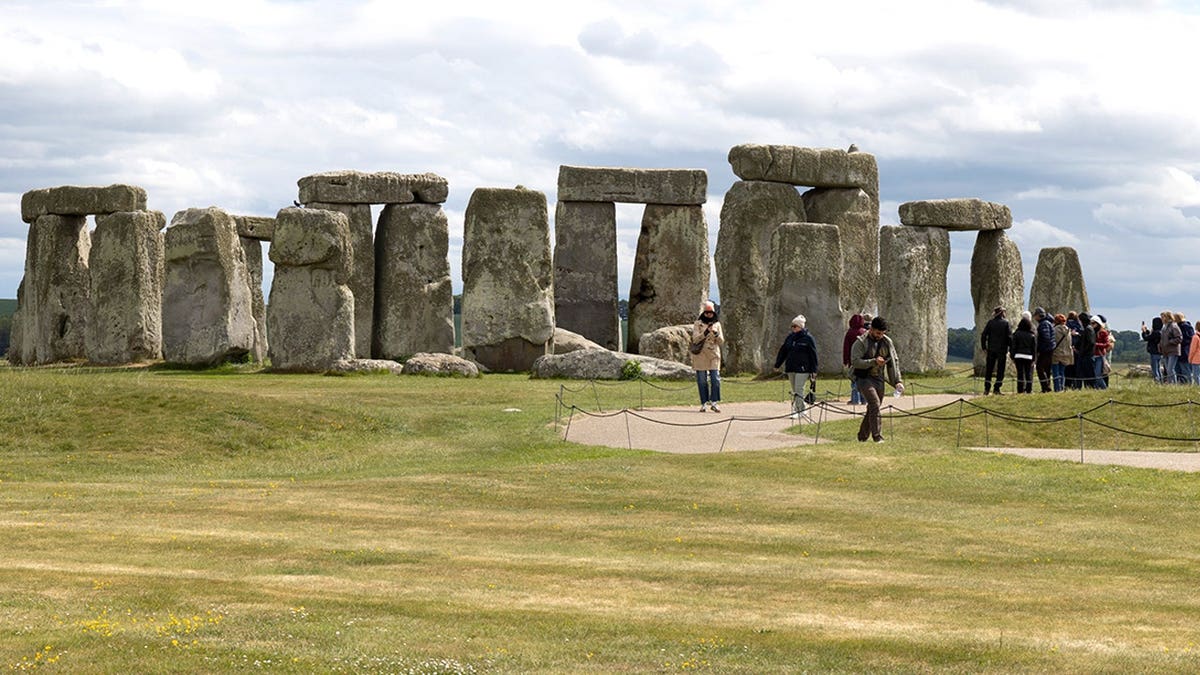
For centuries, historians and archaeologists have debated how Stonehenge was built — and now researchers believe they may have finally traced one piece of the landmark’s complex journey.
The monument, which sits on the Salisbury Plain near Amesbury, Wiltshire, was constructed in stages beginning around 3000 B.C., according to English Heritage, the organization that manages Stonehenge.
New research focuses on Stonehenge’s Altar Stone, which sits near the center of the monument and has long been debated among scholars, news agency SWNS reported.
EXCAVATORS DISCOVER PREHISTORIC VILLAGE BENEATH FUTURE GOLF COURSE: ‘REMARKABLE JOURNEY’
Work by researchers from Curtin University in Perth, Australia, suggests the stone originated in northeast Scotland and reached southern England through a combination of glacial movement and human transport.
Using geological analysis and ice-sheet modeling, researchers found that glaciers may have carried the stone as far as Dogger Bank in the North Sea, or roughly 200 miles.
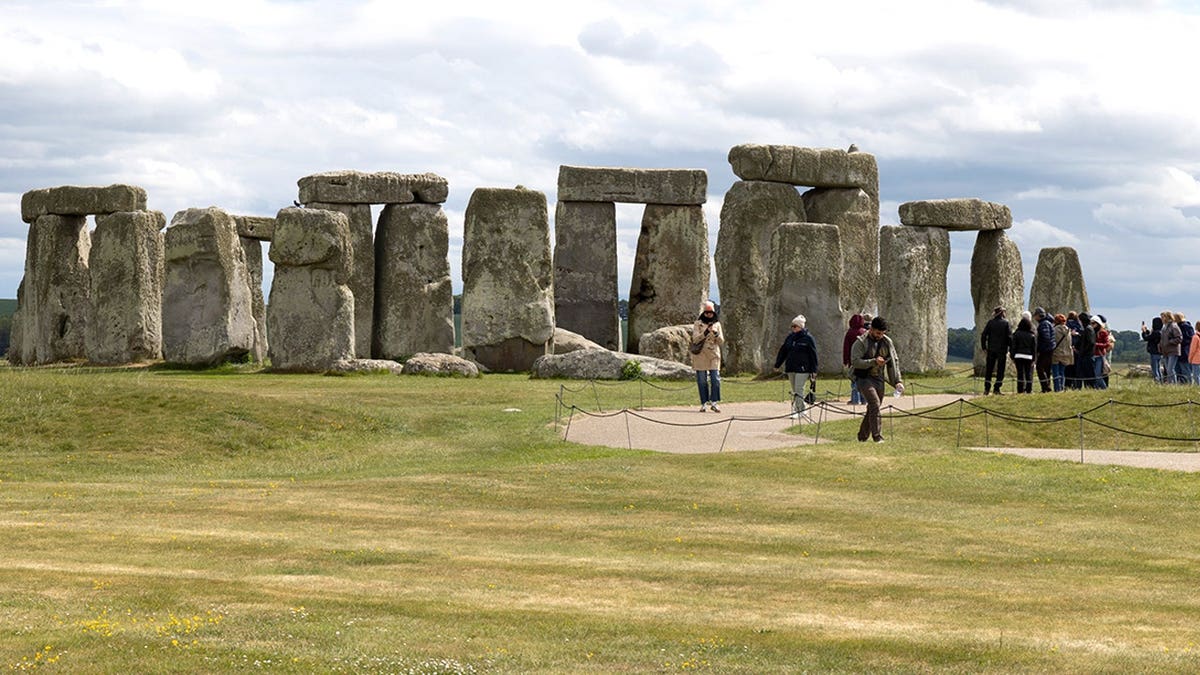
New research suggests Stonehenge’s Altar Stone may have traveled from northeast Scotland before reaching its final location in southern England. (Andrew Aitchison/In pictures via Getty Images)
Prehistoric people then likely transported it to its current site in Wiltshire, another 250 miles away — a feat that researchers said required “tremendous determination.”
CLICK HERE TO SIGN UP FOR OUR LIFESTYLE NEWSLETTER
In a statement, co-lead author Anthony Clarke said the journey would have required careful planning and coordination.
“Rather than being carried naturally by ice, the evidence points to a deliberate, carefully planned movement across a challenging and varied landscape,” said Clarke, according to SWNS.
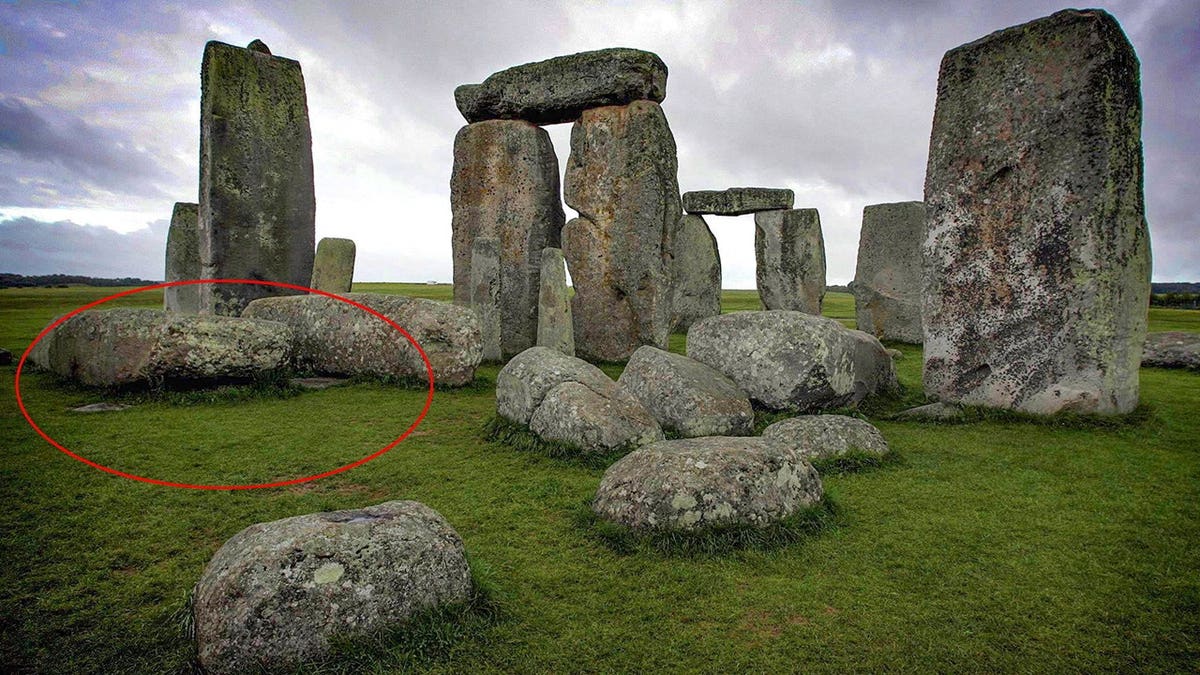
The Altar Stone, circled above, has long puzzled researchers who have studied Stonehenge’s construction and history. (SWNS)
“Our modeling shows glaciers may have transported rocks part of the way during the last Ice Age — potentially as far as Dogger Bank in the North Sea — but not into southern England, meaning the stone would still have needed to be moved hundreds of kilometers by people.”
CLICK HERE FOR MORE LIFESTYLE STORIES
Clarke added that the Altar Stone was likely moved in stages, with prehistoric people transporting the stone after glaciers carried it only part of the journey.
“Transporting a stone of this size over such a long distance would have required planning, coordination and a deep understanding of the landscape — not to mention tremendous determination,” the researcher said.
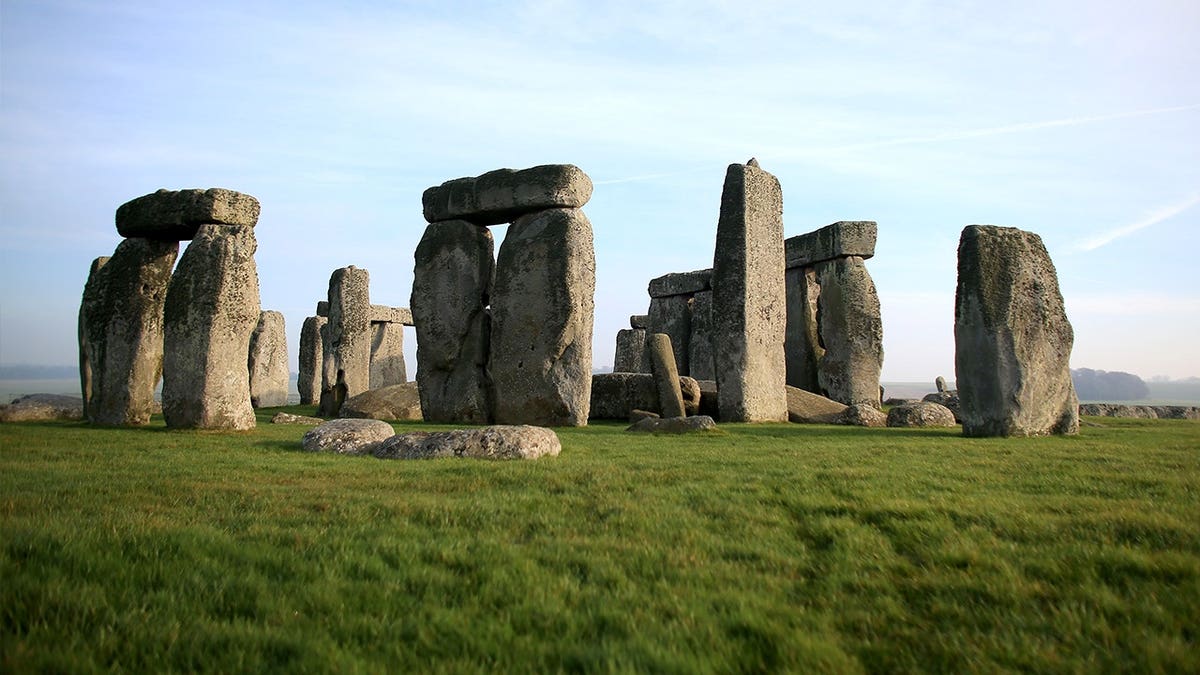
Researchers say evidence supports the theory that prehistoric communities deliberately moved the Altar Stone across a challenging landscape. (Matt Cardy/Getty Images)
“The study demonstrates how combining geological analysis with computer modeling can help resolve long-standing questions about how Stonehenge was built.”
CLICK HERE TO DOWNLOAD THE FOX NEWS APP
The research comes amid a series of recent archaeological discoveries that shed light on ancient Britain.
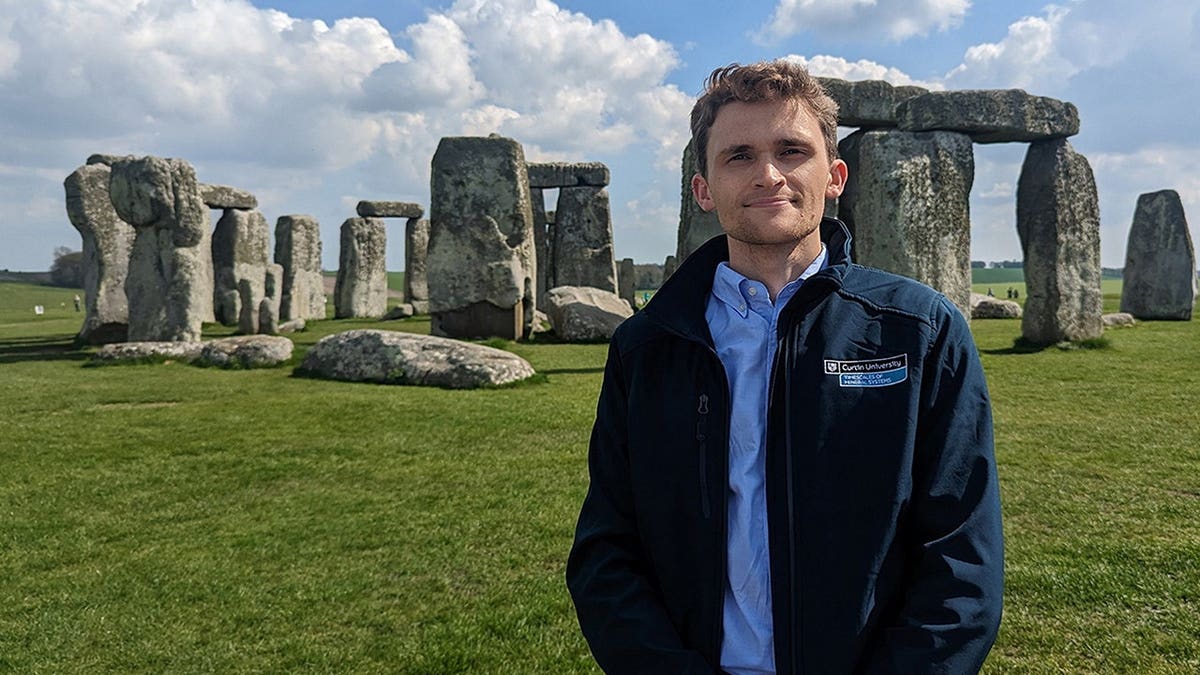
Anthony Clarke, seen above, said new modeling suggests glaciers carried the stone only part of the way before human beings completed the journey. (Curtin University via SWNS)
Earlier this spring, archaeologists uncovered traces of a rare purple dye mentioned in the Bible at two Roman infant burial sites in York.
TEST YOURSELF WITH OUR LATEST LIFESTYLE QUIZ
Also, recently, a 2,000-year-old coin unknowingly used as bus fare in Leeds was identified as a rare artifact dating to the Carthaginian empire.


